
We wrote this article in 2023, when ChatGPT was brand new. Since then AI has become an everyday tool in a lot of marketing teams, so we updated it in October 2026: we kept the good examples and took out what is no longer true.
In short, AI does two things in marketing: it analyses a lot of data faster than a person can, and it generates options, whether copy, images or ideas, that a person then chooses and corrects. Almost everything else builds on those two.
01Two campaigns that used AI before it was fashionable
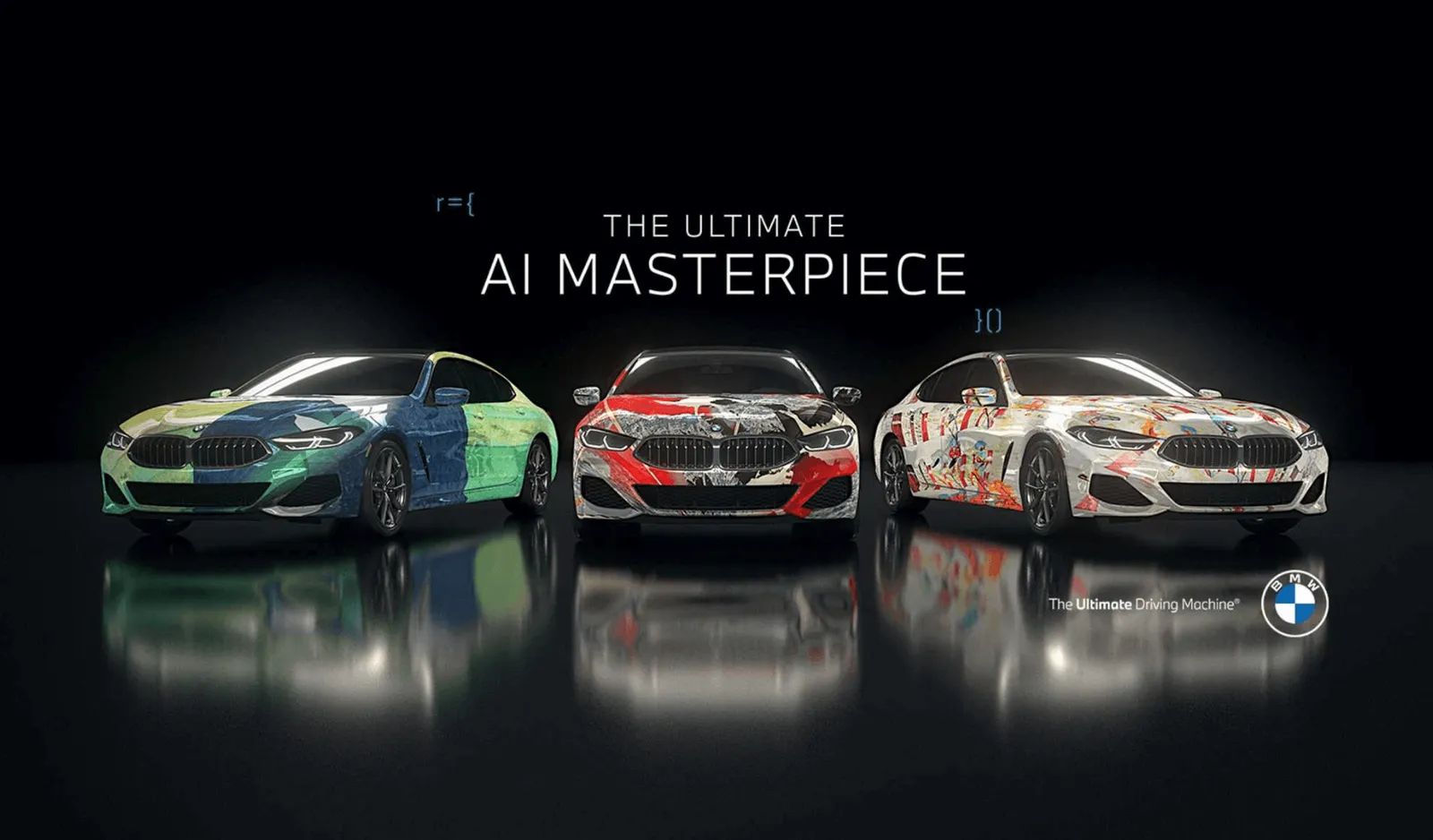
BMW: The Ultimate AI Masterpiece
In 2021 BMW used AI to turn a car into digital art, a project it called “The Ultimate AI Masterpiece”. The algorithm was fed around 50,000 artworks spanning 900 years of art history (contemporary art included) and generated designs that were then applied to a few BMW 8 Series Gran Coupé cars.
Heinz and DALL-E 2
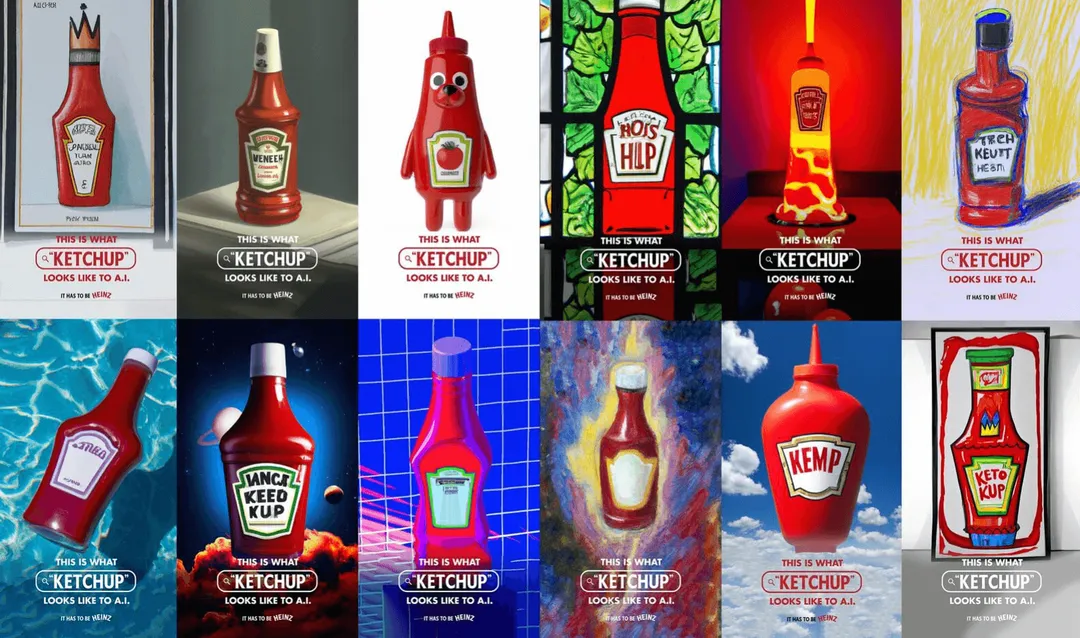
In 2022 Heinz ran a campaign built entirely on AI-generated images (DALL-E 2). Its agency had noticed that when you gave the tool a prompt like “ketchup in outer space”, most of the images it produced showed bottles that looked a lot like Heinz. The brand also invited consumers to make their own ketchup images with DALL-E 2 (which it then used on social media), and the agency summed it up: “It seems that, just like people, AI prefers Heinz.”
02Where AI helps in day-to-day work
1. Faster research
Today's AI assistants can search the web and show you their sources, so they quickly summarise a topic, a report or what a competitor is saying. The gain is time. The risk is the same as in 2023: an answer can sound confident and still be wrong, so open the sources and check them.
2. Content ideas and variations
For social media, AI is good at variations: ten headlines, five shorter or punchier versions of the same copy, adapting a message for another channel. It works when it gets a good brief (the brand, the audience, the tone, what it must not say) and when a person picks and rewrites. Copy left exactly as it comes out sounds like everyone else's.
3. Website content and search
AI can help you find the questions customers ask, structure an article and check that it answers clearly. There is a newer reason too: more and more people read the AI answer in Google or ChatGPT instead of visiting the site, and clear, well-structured, sourced pages are more likely to be cited there.
When Google shows an AI summary, people click through to a website in only 8% of searches, against 15% without one, according to a Pew Research Center study. We wrote about this in What are 100,000 views worth?
Subscribe to the newsletter.
Like how we think? Get an article like this one twice a month.
03What stays with people
Checking. AI doesn't know what is true about your product, what you promised customers or what you are not allowed to say in an ad. And in the European Union, since August 2026, some synthetic content has to be labelled as such; we covered the new rules in Sometimes marketing tries to do too much.
If you want to learn to work with these tools, the free courses from Google, OpenAI and Anthropic are in 13 free digital marketing courses.
If you would like pieces like this once a month, subscribe to Marketing in Motion, the Digital Star newsletter.