

We’ve got good at measuring how far a message travelled. We know how many people saw it, how many clicked and how long they stayed with the work. We know much less about what happened in the minds of the people who saw it.
Did they remember the brand? Did Google give them the answer they wanted without a visit to the site? Did anything change in how they choose brands?
01What caught our eye
Google is keeping the traffic it used to send to websites
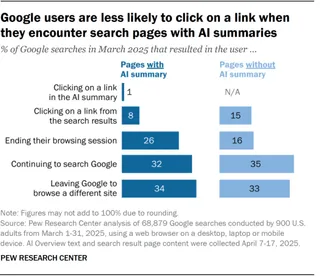
A good spot in Google’s results no longer brings visits to the brand’s site by default. Pew Research Center looked at almost 69,000 searches by 900 adults. When Google showed an AI-generated summary, people went on to a website in only 8% of searches, against 15% without one. Links inside the AI answer itself were clicked in just 1% of cases.
According to Chartbeat data cited by the Reuters Institute, Google Search traffic to more than 2,500 news sites fell by 33% in a year. A brand site won’t necessarily see the same drop, but the direction is hard to ignore.
SEO still matters, but visibility and traffic can no longer be treated as the same thing. If Google can sum up a page completely, people have no reason to open it. Brands need content an AI summary can’t replace: tools, comparisons or information useful enough to earn one more click.
Reach from clip farms is showing its limits
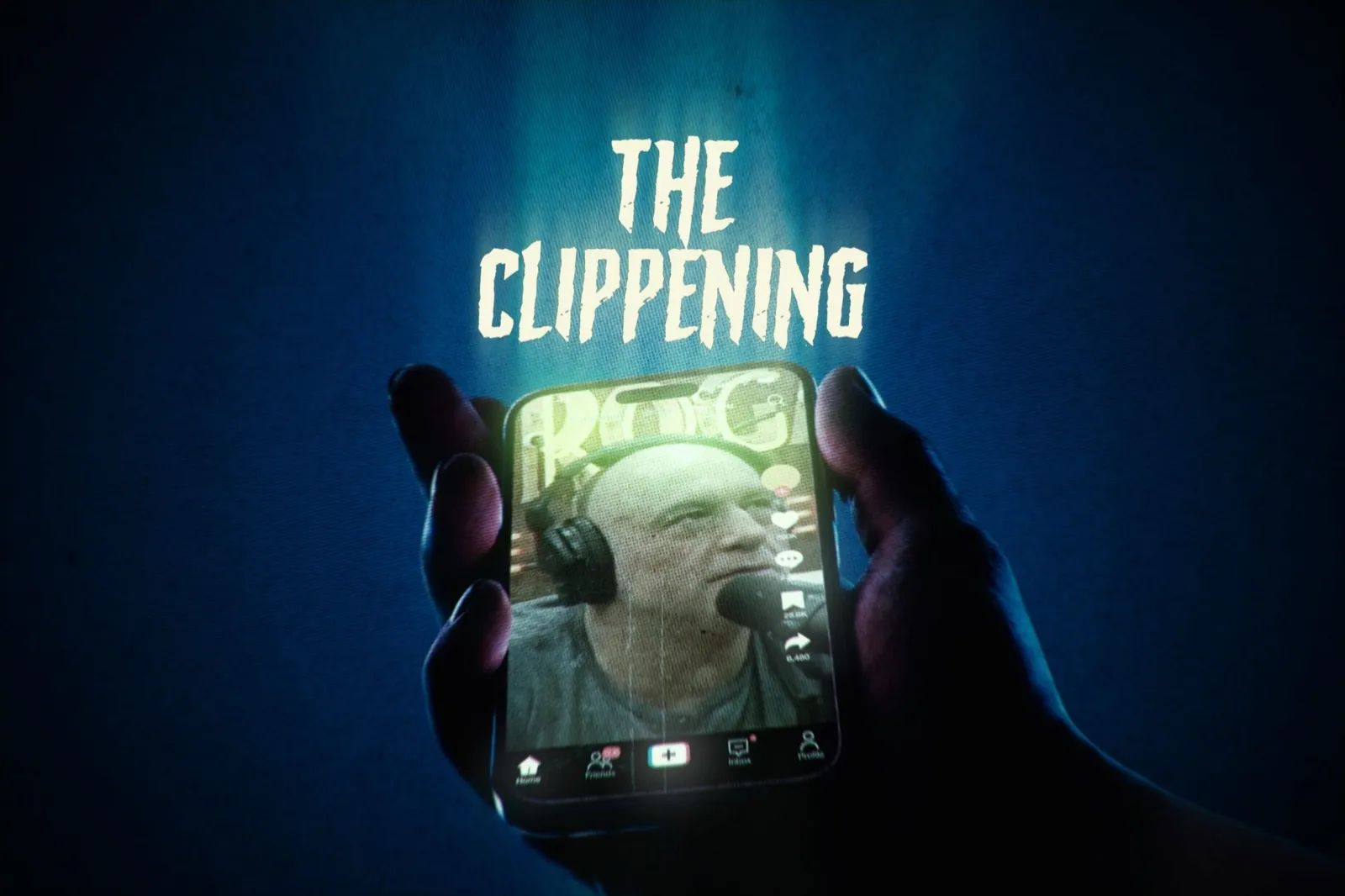
A whole industry of “clippers” has grown up around podcasts and livestreams: people paid to cut short segments and post them across dozens or hundreds of accounts. They’re often paid per thousand views, and these accounts can bring in around 3,000 dollars a month on average, a report by The Verge shows.
Meanwhile, Meta says it is cutting the reach of unoriginal content: reuploads, minor edits, and borders or captions added without any real contribution.
Short clips can help an idea travel. But reach is too often mistaken for people’s interest.
Creators work like mini agencies but are paid as if for one post
A creator’s job has become more complicated. Brands ask them to come up with the idea, understand the audience, shoot in several formats, take feedback and sometimes pay a videographer, photographer or stylist out of their own pocket.
Vogue Business describes the growing pressure on creators, and the audience’s lack of interest in content that looks like a classic ad hidden in a Reel. People aren’t rejecting creators. They’re rejecting content where the creator’s voice disappears under the brand’s demands.
We pick a creator for their relationship with the audience, then control the message so tightly that we risk removing the very reason we picked them. Longer partnerships can solve part of the problem: the creator has time to understand the product, and the brand can see what works beyond a single post.
If ten creators say the same script in ten different settings, it’s just the same ad multiplied.
02Worth knowing
Influencer marketing has grown faster than the ways we measure it

IAB shows that every platform reports different numbers, brand lift studies are used only on some campaigns, and discount codes capture a tiny share of real influence.
The problem can start before reporting. If we don’t define the creator’s role at the outset, we’ll pick the numbers that suit us afterwards:
- Conversions. They favour creators who are good at immediate sales.
- Reach. It favours the big creators.
Neither measure is wrong, but either can be the wrong one for what that campaign was meant to do.
News creators aren’t replacing the press as much as it seems
The Digital News Report 2026 shows that 27% of respondents across 48 markets get news from news creators every week. People find them easier to follow, but also less impartial than publications.
Most people, though, aren’t choosing between creators and the press. The creator explains or comments on information a publication produced. The same idea can work for brands: the brand brings authority, and the creator makes the subject easier to grasp.
Visibility in AI answers can’t be boiled down to one exact score
The same AI tool can answer two almost identical questions differently. A model update can change its recommendations without the brand changing anything.

A new measurement framework from IAB recommends tracking several questions, models and moments rather than reporting a single snapshot. A score such as “AI share of voice” can show a trend, but it doesn’t have the precision of ordinary media measurement. More importantly, a mention in an AI answer doesn’t prove that people visited the site or bought the product.
Subscribe to the newsletter.
Like how we think? Get an article like this one twice a month.
03A case study worth a look
Vaseline took TikTok hacks into the lab

Plenty of unofficial uses for Vaseline Jelly were doing the rounds on TikTok and other platforms. Instead of turning them into a cute collection of posts, the brand took the ideas into the lab: Unilever’s scientists tested the hacks and said which ones worked and which didn’t.
Creators weren’t used only for distribution, but also as a source of insight into how people actually use the product. The Vaseline Verified programme then went further:
- New products
- A brow primer and a brow gel, grown out of uses discovered in the community
- Partnership
- Runners used it against chafing, so the brand partnered with the London Marathon, with application points along the route
- Sales
- A 43% rise, according to Unilever
- Co-created products
- Launched through TikTok, they sold 466% better than the classic version at launch
These are Unilever’s own figures, on the sales rise and in its round-up of Cannes Lions winners. There isn’t enough data to separate the campaign’s effect from promotions, distribution or other factors.
Social listening paid off here because the insight reached the people who develop the products.
The brand didn’t settle for joining the conversation. It used the conversation to change what it sells.
04Just hype?
Will AI agents end up shopping for us?
Agentic commerce promises an almost effortless process: an assistant finds the products, compares them and completes the purchase.
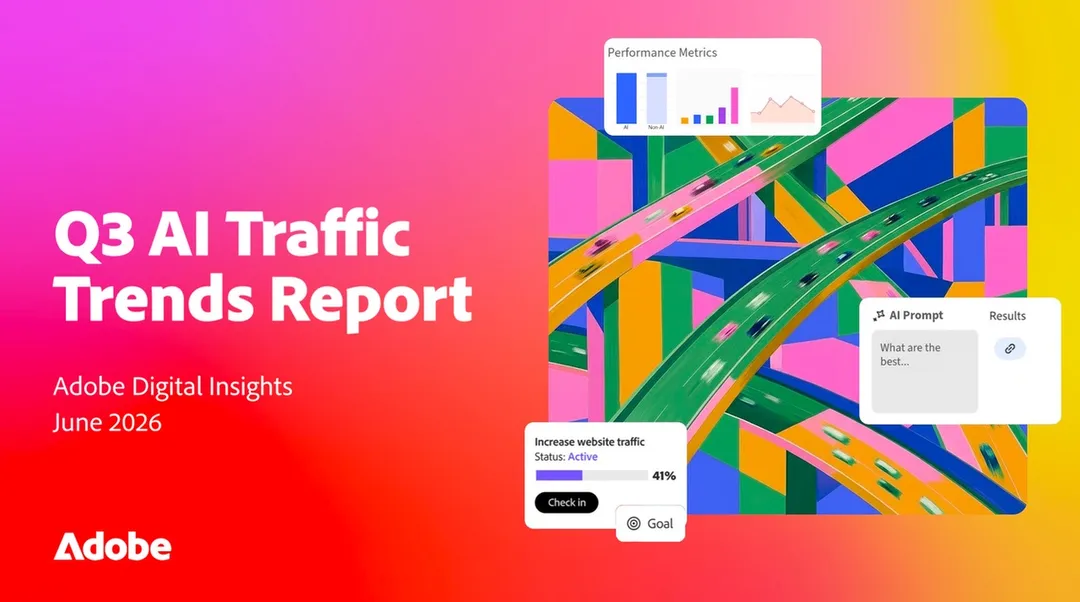
Early data shows AI is starting to influence shopping. The next step, where the agent decides and pays on its own, is still rare.
The first two figures come from Adobe Analytics, the third from a Checkout.com survey published in June 2026. People arriving from an AI tool may already have been more set on buying, which would explain part of the higher conversion.
Forrester notes that most experiences leave the final decision and checkout to the user.
Verdict: useful, but overhyped. AI is becoming a real source of discovery and comparison. The fully autonomous shopper is, for now at least, more convincing in demos than in everyday life.
Sources
- Pew Research Center: Google users are less likely to click on links when an AI summary appears
- Reuters Institute: Journalism, media and technology trends and predictions 2026
- The Verge: the business of social media clipping
- Meta: rewarding original creators on Facebook
- Vogue: consumers are fatigued, influencers are burnt out
- IAB: Creator economy measurement landscape
- Reuters Institute: Digital News Report 2026, news creators
- IAB: Measuring Visibility in the AI Era
- Unilever: how Vaseline turned verified hacks into new products
- Unilever: relevance as a growth engine
- Unilever: 2026 Cannes Lions-winning campaigns
- Adobe: Q3 2026 AI traffic trends report
- Forrester: the state of agentic commerce in mid-2026