

Search Google for “Is it worth buying from” followed by your brand’s name, and read the AI answer at the top. If there isn’t one, switch to AI Mode. It’s text you didn’t write, pieced together from reviews, forums and articles.
More and more often, customers hear about your brand from someone else first. From an AI assistant, from a creator, or from people talking about you online. Your brand has a new communications team. You don’t pay it, and you don’t brief it.
01What caught our eye
Google describes your brand before you do
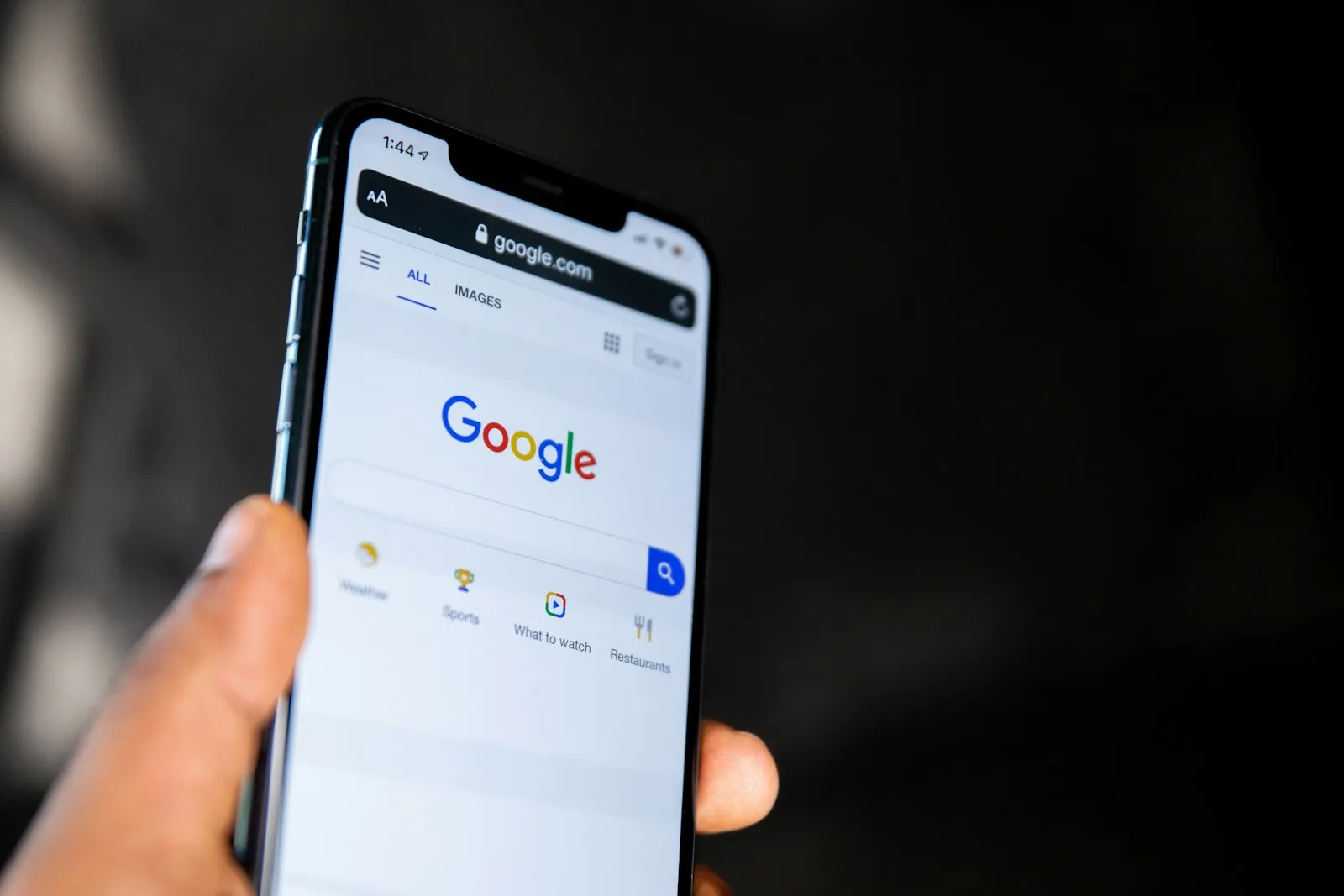
Until recently, anyone searching for a brand on Google saw its website first, and often its ad. In September, Google started placing an AI-written summary above both on most of these searches, built from reviews, forums and articles. In other words, from what other people say about you. Google didn’t announce the change.
In the first half of the month, the summary appeared on 26 to 35% of brand-name searches, depending on the day. After 27 September, it showed up on more than 80%. The figures come from DemandSphere, which tracks them daily. Chris Long of Nectiv checked 100 big brands separately and found the summary on 93 of them.
The summary also cuts clicks. When it appeared, people clicked on a standard result in 8% of cases, against 15% when it was missing, according to a 2025 Pew study of searches by 900 Americans.
The September data isn’t broken down by country, and it comes from a company that sells monitoring. In some markets, Romania among them, the summary doesn’t yet appear on every search, so your results may look different.
AI visibility isn’t just a ChatGPT question any more
When a team checks what AI assistants say about its brand, it usually looks only at ChatGPT. In the US, that makes less and less sense. Comscore tracks the online activity of a panel of Americans who agreed to be measured. In January 2026, ChatGPT handled 70% of their prompts to AI assistants. By June, only 50%.
PPC Land broke down the figures from Comscore’s Q2 report.
Gemini already sits on Android phones, in Google Search and in Gmail, so plenty of people use it without ever choosing it. That’s our reading, not Comscore’s, and Comscore doesn’t say how many people are on its panel either. There’s no comparable data for Romania yet.
If you only test in ChatGPT, you see roughly half of what people learn about you, at least in the US. Ask the same questions about your category in three assistants and compare the answers.
Creator budgets have grown. The rules haven’t

Creator partnerships started out as a campaign tactic and now eat into media budgets for distribution. The rules for working with creators haven’t kept up. On 30 September, ISBA, the body representing the UK’s biggest advertisers, published a framework for working with creators. Among its members:
- 9% treat creators as a core part of their strategy.
- 48% work with them case by case.
- 59% say they can only “somewhat” judge what creators bring in.
It isn’t always clear who owns creators, either. In around a quarter of companies, the responsibility is split across several teams.
ISBA describes three models. In the first, creators show up only in campaigns and one-off moments. In the second, they’re always on in the marketing mix, often with a retained agency. In the third, they’re part of how the brand sells and are measured like any other channel. The framework doesn’t push anyone towards the last one. The first step is deciding who is responsible for creators and how you measure their results.
02Worth knowing
Romanians get their news from Google, YouTube and ChatGPT more than most Europeans
Many Romanians find out what’s going on from Google, YouTube or ChatGPT, platforms that gather what others write and choose what to show. Newspapers and radio sit below the EU average.
52% of Romanians use search engines to follow current affairs, against 43% of Germans and 32% of French people. For video platforms it’s 38%, against 27% and 17%. For AI chatbots, 16%, against 9% and 6%. Only Cyprus ranks higher for search. The data comes from the June 2025 Eurobarometer, carried out online, so the figures are probably a little inflated.
Trust is low, too. Only 23% of Romanians trust the news, against 37% globally. How far people trust what Google says about your brand is still an open question.
The angry customer in the comments wants to feel understood first

In a Journal of Marketing study, Dennis Herhausen and his colleagues analysed more than 6,000 complaints on Facebook and Twitter. They were addressed to German companies, a US airline and a UK retailer. The researchers also ran three experiments.
Angry customers thanked the company more often when it replied in their own style, formal or casual, and showed it understood their trouble, with a line such as “I can imagine how frustrating that was”. Empathy mattered most, and it worked even when the problem hadn’t been fixed yet. With calm customers, it made no difference.
It’s worth taking another look at the reply templates legal signed off.
For some products, people would rather take an algorithm’s advice

Chiara Longoni and Luca Cian set out to find out, in experiments with more than 3,000 people, when an AI’s recommendation counts for more than a person’s. For functional qualities, such as how well a winter jacket breathes, participants preferred the AI’s recommendation. For taste, texture or pleasure, they preferred a person’s.
So an AI assistant that recommends products may be credible for fuel or a loan, less so for chocolate or a dress. The advantage disappears when people want something tailored to them, or when the AI works alongside a person.
Subscribe to the newsletter.
Like how we think? Get an article like this one twice a month.
03A case study worth a look
Škoda and the forum that specced its car
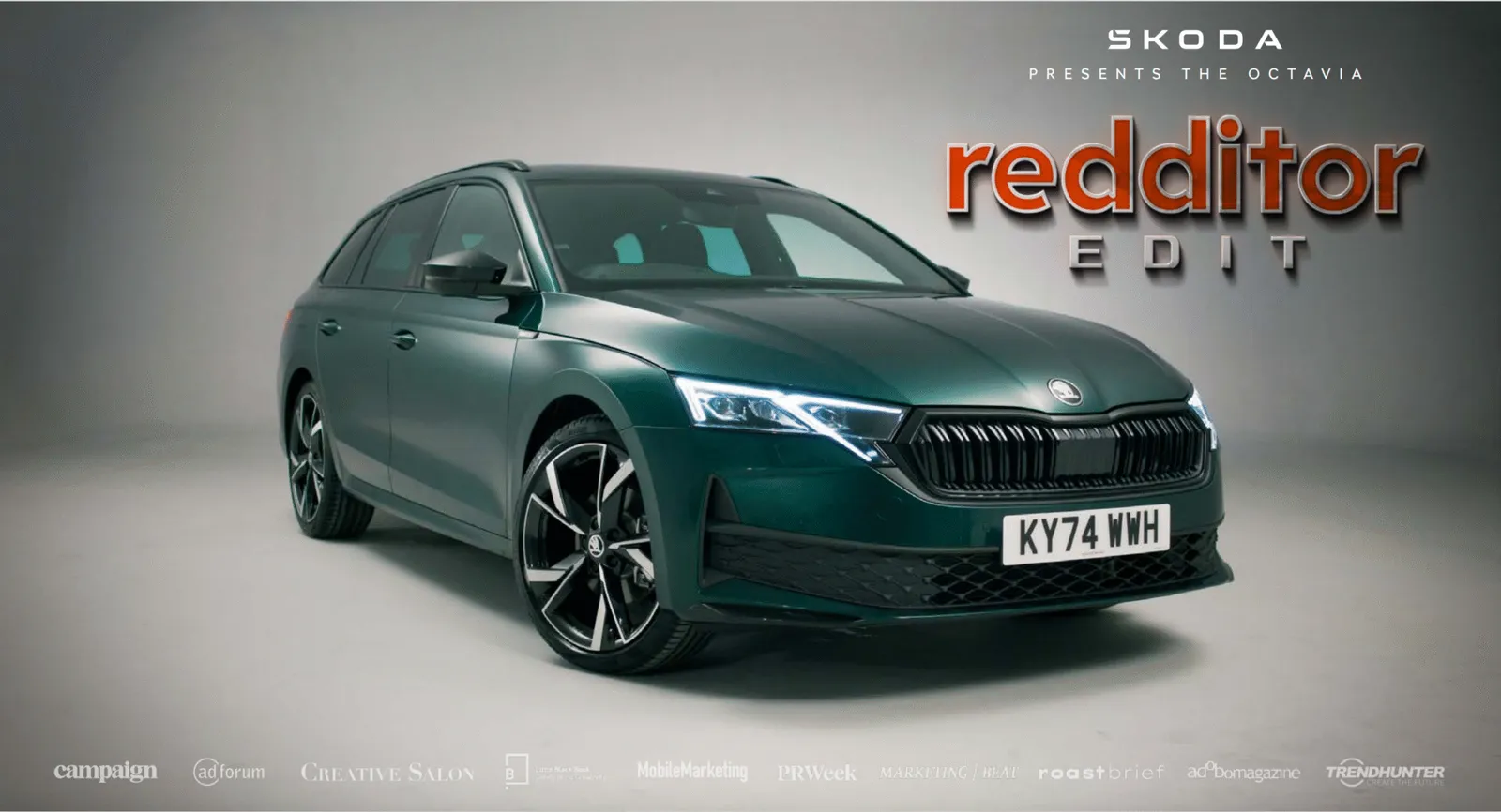
In the UK, the Škoda Octavia was the sensible, reliable and, for many, boring car. “Does it come with brown shoes as standard?” someone joked. On Reddit, though, members of r/CarTalkUK, around 400,000 people, had been praising it for years and jokingly called it “our Lord and Saviour”.
For the launch of the new model in 2024, Škoda went straight there. Forum members voted on the body style, colour, engine and headlights of a special edition, the Redditor Edit. Then the brand let the enthusiasts, not the motoring press, drive the new car first.
Nobody asked them for reviews, but they wrote them anyway. “We took their quotes and made them the backbone of the comms,” Tom Sheppey of the agency PHD told MediaCat. Their words ended up in social ads and on billboards.
The agency also says that Google’s AI summary now recommends the Octavia as a first family car.
What we don’t know. The figures come from the agencies and Škoda, not an independent source, and the sources give different numbers for traffic and mentions. We don’t know how many cars the percentage stands for.
The people who praise you without being paid usually already exist, on a forum or in a group.
They’re worth finding before the campaign brief.
04Just hype?
Synthetic respondents
Synthetic respondents are people simulated by AI. Instead of waiting weeks for a survey of real people, you give a model a consumer profile and let it fill in the questionnaire. A study in Political Analysis showed that a model fed profiles of real people can reproduce the opinions of demographic groups.
In September, Pew built AI copies of real respondents and compared the answers. The humans said “not sure” four times as often as their copies, 16% against 4%. On civics questions, about the US Constitution or NATO, the humans got the answer right about half the time, the copies 80% of the time. The copies knew more than the people they were imitating.
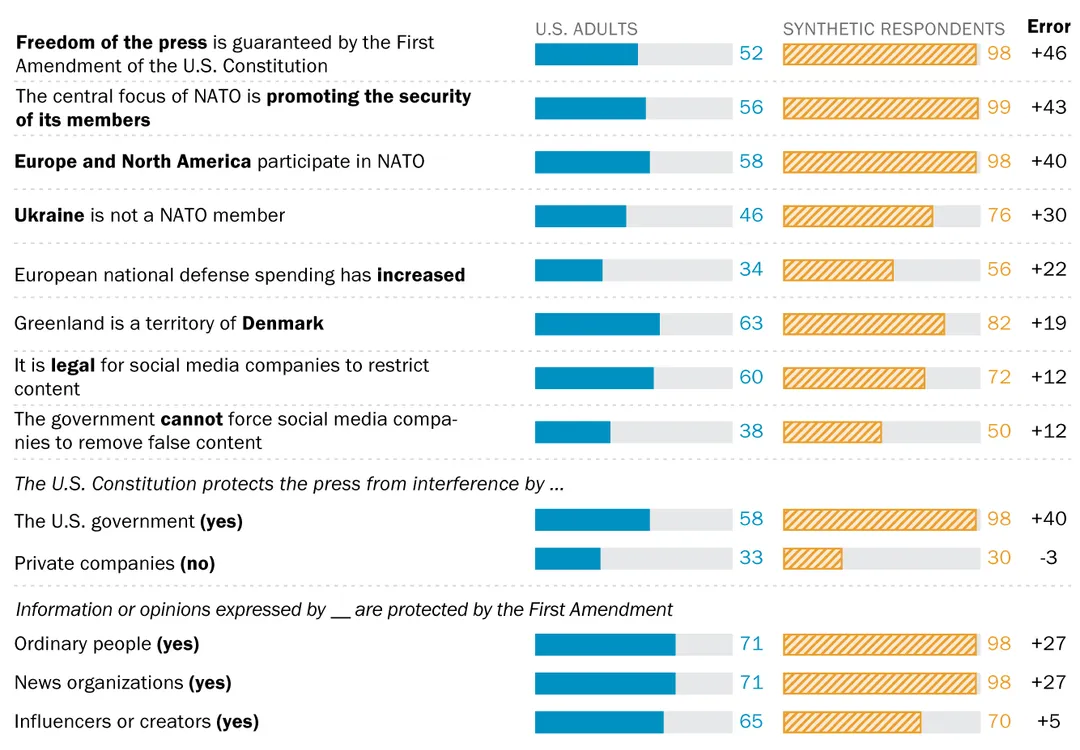
Another study found answers that were too similar to each other and results that changed from one run to the next.
Run a brand awareness test this way and your brand may come out better known than it really is.
Verdict: useful, but overhyped. Good for forming hypotheses. To test them, you still need people.
Sources
- DemandSphere: AI Overviews on branded queries tripled in September
- Search Engine Land: Google AI Overviews jump on branded queries
- Pew Research Center: Google users are less likely to click on links when an AI summary appears
- Comscore: Q2 AI Intelligence Report 2026
- PPC Land: ChatGPT loses 20 points of US AI prompt share to Gemini and Claude
- Marketing Week: ISBA’s creator economy framework
- Eurobarometer, European Parliament: Social Media Survey 2025
- Reuters Institute: Digital News Report 2026, Romania
- Journal of Marketing: complaint de-escalation strategies on social media
- American Marketing Association: how companies can de-escalate angry complaints on social media
- Journal of Marketing: the word-of-machine effect
- UVA Darden: AI, word of mouth and word of machine
- Leo Burnett: Octavia Redditor Edit
- MediaCat: how Škoda found community on Reddit
- The Drum: how Škoda Octavia reignited interest with Reddit superfans
- Political Analysis (Argyle et al.): using language models to simulate human samples
- Pew Research Center: how synthetic respondents express certainty and factual knowledge
- Political Analysis (Bisbee et al.): the perils of synthetic survey data