


When sales slow down, the brand budget is usually the first thing someone cuts. In the first half of October 2026, a few big companies did the opposite. Nike and PepsiCo put more money into marketing, and Meta started selling advertising the way TV does, in slots booked in advance.
We followed the money going back into brands and looked at what happens to it. Levi’s shows that a bigger budget won’t rescue a campaign that says something other than what customers want.
- Nike and PepsiCo. Both raised marketing spend even though sales disappointed.
- Meta. It now sells ads in reserved time slots, with the price and audience known upfront.
- Levi’s. It promoted baggy jeans, but customers wanted low-rise.
01What caught our eye
Nike and PepsiCo spend more on marketing when sales disappoint
On 1 October, Nike reported revenue of 11.2 billion dollars, down 4% on a year earlier. Nike Brand digital sales fell 13%. In the same quarter, Nike spent 5% more on what it calls “demand creation”: marketing, advertising and sponsorship. The total reached 1.3 billion dollars, and the company says the increase went mainly into brand marketing.
A quarter earlier, the same spending had fallen 4%. Nike is saving elsewhere, through a 2.5 billion dollar cost-cutting programme over five years, Marketing Week notes.
At PepsiCo, overall results grew, but CEO Ramon Laguarta wasn’t happy with the US. On the analyst call on 8 October, he said advertising and marketing spend had grown by double digits in both US divisions. The company is cutting costs that don’t drive growth and moving the money to its brands, according to the call transcript.
If someone at your next budget meeting suggests cutting brand spend to save the quarter, you have two big examples of companies doing exactly the opposite.
Meta sells guaranteed audiences, TV-style
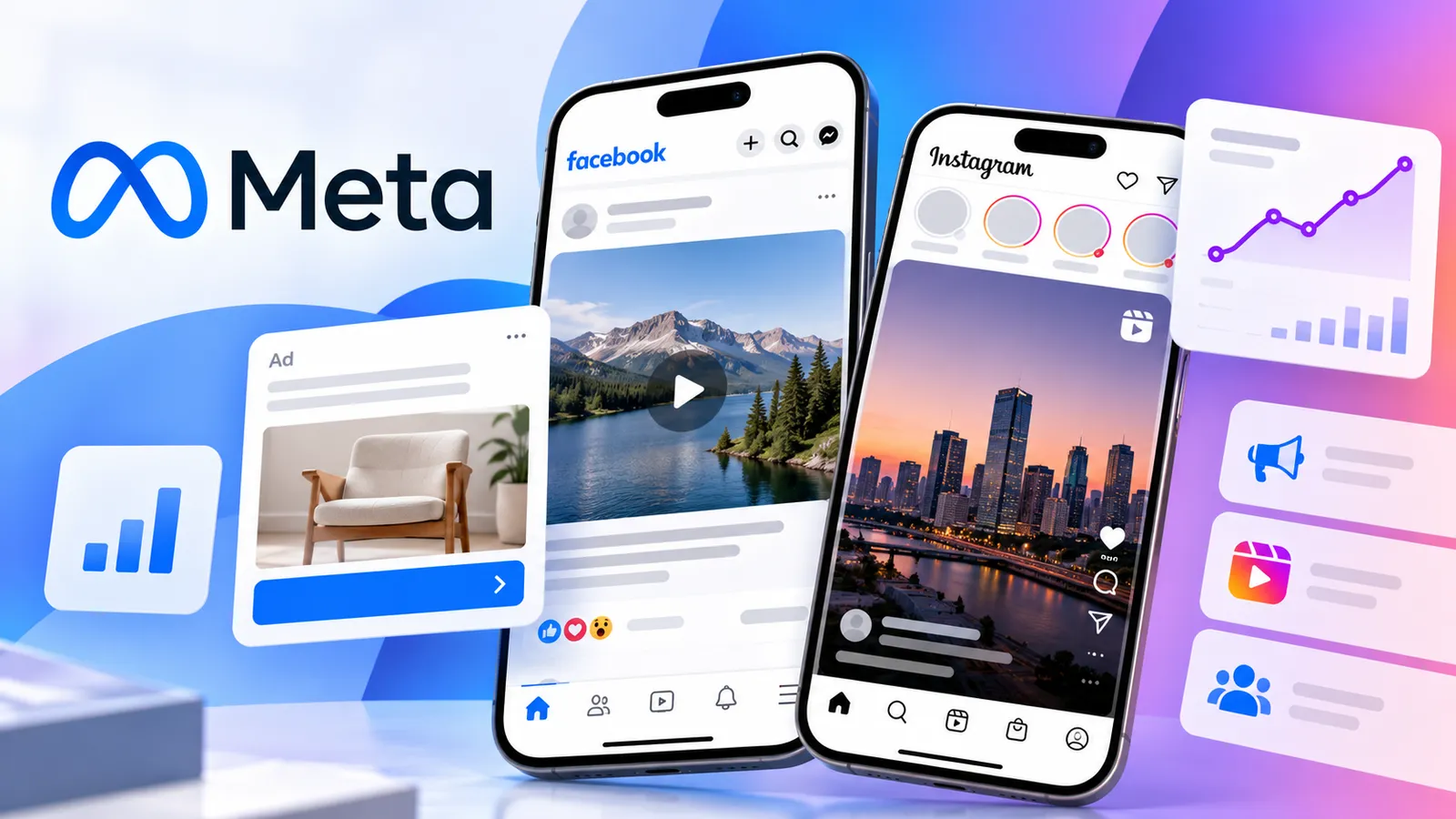
Until now, every impression on Facebook and Instagram was bought at auction, so prices climbed on busy days. With Ads Super Burst, announced on 15 October, a brand can book a window of 3 to 24 hours on a single day. It knows upfront what it will pay and how many people the ad will reach. Meta guarantees that number to within 5% of the forecast, and each person sees the ad only once, AdExchanger reports.
The first brands to try it reached about 34 million people per campaign. The share of people who remembered the ad rose by 2.9 points (the median), according to Meta’s figures quoted by Search Engine Land. Meta is also testing First Impression Ads, which let a brand buy the first ad someone sees when they open Facebook.
The format is rolling out gradually, and we don’t yet know when it will reach every market. When it does, big days such as Black Friday will need booking early on social too, as they do on TV. For now, the figures on how well it works come only from Meta.
Levi’s put its money behind the wrong jeans

For back-to-school, Levi’s built its campaign around baggy jeans. Customers wanted low-rise jeans instead, in any style. CEO Michelle Gass admitted on the analyst call that the advertising hadn’t brought the traffic and demand the company expected, MediaPost reports. Sales in its own stores and online grew by only 2%, below expectations, according to Bloomberg Línea, while US sales fell 1%.
The marketing team reshot the campaign, rearranged the stores and asked the creators it worked with to post about low-rise styles. The company also put part of the roughly 80 million dollars it got back in tariff refunds into promotion and marketing, its quarterly results release shows.
Levi’s promoted what it wanted to say, while people were looking for something else. To its credit, you don’t often hear a CEO tell analysts that a campaign didn’t work, and why.
02Worth knowing
Big consumer goods companies spend a growing share of each dollar on ads
WARC worked out what share of revenue 25 of the biggest advertisers spend on advertising. Taken together, it fell from 6.1% in 2019 to 5.5% in 2025, Marketing Week reports. Most of the drop comes from tech companies. Alphabet, Netflix, Meta and Microsoft went from 13% to 7.4%.
The big consumer goods makers are heading the other way. Their share rose from 11.6% in 2023 to 12.5% in 2025, according to Marketing Dive. Part of the rise is down to accounting. Some money paid to retailers for shelf space and promotions is now booked as advertising.
Toxic comments under ads affect sales
Two researchers at Harvard Business School tested what happens when toxic comments under an ad are hidden automatically. By toxic they mean spam, swearing and attacks. In a test on Facebook and Instagram, every dollar spent on the moderated campaign brought in 68 cents in sales, against 46 cents for the unmoderated one. The number of measured sales was small, so treat the result as a signal. Complaints about the product stayed visible.
In online experiments, the effect reversed when the platform showed that the brand had hidden comments attacking it. People saw it as censorship. When the brand announced its own moderation rules, the benefit held. The study has not yet been peer reviewed.
Romanians live on social media, much less on email

In 2025, 85% of Romanians who had used the internet in the previous three months went on social media. The EU average is 72%, and only Cyprus, Denmark and Malta rank higher. On email, the ranking flips. Only 49% of Romanians online send or receive email, against 87% across the EU. That is the lowest figure in the Union, Eurostat data shows.
If you build your customer relationships in Romania through a newsletter, bear in mind that almost half of Romanians online don’t use email at all.
Subscribe to the newsletter.
Like how we think? Get an article like this one twice a month.
03A case study worth a look
IKEA and the hidden tags in Portuguese homes
In Portugal, many people believed furniture was no longer built to last. For IKEA, which sells furniture at low prices, that was a reputation problem.
Almost every IKEA product carries a hidden tag with its name, code and production date. In 2024, 20 years after entering the Portuguese market, IKEA asked people to find the tag on their old furniture, photograph it and send it in. The search was on for the oldest IKEA piece in the country, and entrants could win a 2,000 euro gift card, The Drum wrote at launch. The contest was backed by a film, radio spots, outdoor and influencers. The campaign, by the agency Uzina, is on Ads of the World.
This way, IKEA didn’t have to say its furniture lasts. Its customers said it for them, with the production date on the tag, and every photo sent in doubled as a review.
The figures come from the Cannes Lions entry published by WARC, and were achieved without price cuts or extra media spend. The campaign won silver in Creative Effectiveness in 2026.
Because they come from an awards entry, the numbers are the brand’s and the agency’s own. We don’t know what period they were compared with, whether they cover all sales or only some categories, or who measured the change in perception.
If your product stands the test of time, the proof is already in your customers’ homes.
04Just hype?
Microdramas as an ad format

Microdramas are vertical series made for phones, with episodes a minute or two long. Brands are interested because people watch dozens of episodes in a row.
The first figure comes from Sensor Tower and the second from Adjust, both quoted by PPC Land. ReelShort is a mobile streaming app made only for microdramas. Crocs has already run a five-episode series on it.
The money looks weaker. In Europe, monthly revenue per user for microdrama apps fell from 2.05 dollars in 2025 to 0.24 dollars in the first quarter of 2026. Almost every figure comes from companies that sell data or advertising, PPC Land notes. And we haven’t found a single brand that has published sales results.
Verdict: too early. If you want to try it, run a small test with the right creator, out of the social budget you already have.
Sources
- Nike: first quarter fiscal 2027 results
- Marketing Week: Nike puts more into brand marketing
- The Motley Fool: PepsiCo Q3 2026 earnings call transcript
- AdExchanger: Meta is selling ad slots TV-style
- Search Engine Land: Meta’s new brand advertising formats on Facebook and Instagram
- MediaPost: Levi’s owns up to a back-to-school marketing miss
- Bloomberg Línea: Levi’s direct sales slow after a marketing misstep
- Levi Strauss & Co.: third quarter 2026 results
- Marketing Week: the biggest brands spend a smaller share of revenue on ads
- Marketing Dive: consumer goods giants step up ad intensity
- Harvard Business School (arXiv): automated comment moderation improves ad performance
- Eurostat: individuals’ internet activities, 2025
- The Drum: IKEA sets out to find Portugal’s oldest furniture
- Ads of the World: IKEA Hidden Tags campaign
- WARC: IKEA Hidden Tags Cannes Lions entry
- PPC Land: what we know about microdramas