
Between 2024 and 2026 the way an email reaches a person changed: mailbox providers became stricter, and inboxes started to be read and summarised by AI. We wrote this article in 2024 and updated it in October 2026. Here is what we think will matter in 2027.
01The inbox no longer forgives careless sending
The big mailbox providers have turned good practice into mandatory rules for high-volume senders:
- Gmail, since February 2024
- More than 5,000 messages a day to Gmail addresses: authenticated email, one-click unsubscribe processed within two days, and a spam-complaint rate below the threshold.
- Yahoo, since February 2024
- Rules similar to Gmail’s, brought in at the same time.
- Outlook, since 5 May 2025
- More than 5,000 messages a day to Microsoft addresses: SPF, DKIM and DMARC are mandatory. Mail that fails them is rejected.
The details are in Google’s announcement and Microsoft’s announcement. The rules have since got tougher: since November 2025, Gmail has been enforcing them more strictly, with temporary or permanent rejections for mail that fails them, and Outlook, which at first sent such mail to Junk, now rejects it with error 550 5.7.515.
For a brand, this means email is no longer only a creative matter. Three things decide whether a message lands in the inbox or in spam:
- Domain settings. SPF, DKIM and DMARC set up correctly for the domain you send from.
- List hygiene. Addresses that actually want your emails, regularly cleaned of inactive ones.
- Frequency. A large, old list mailed often does more harm than a small, active one.
02AI reads the email before the person does
Gmail, with Gemini, and Apple Mail, with Apple Intelligence, can summarise an email or a thread right in the inbox. More and more often, people see the summary first and only then, maybe, the email.
The practical consequence: the subject line and first sentence have to say clearly what the email offers, not build mystery.
- The subject line that loses
- “You won’t believe this…”
- What the AI summary says
- “20% off shoes, until Sunday.”
- What survives summarising
- Short emails with one main message, stated clearly in the subject line.
03Open rate is no longer a reliable measure
The figures come from Litmus’s email client market share report, based on more than 1.5 billion opens. Opens affected by Mail Privacy Protection are generated automatically and don’t show whether anyone read the email.
That is why in 2027 email campaigns are judged on clicks, replies, sales and revenue per recipient. A/B tests based only on open rate can lead to the wrong conclusions.
Subscribe to the newsletter.
Like how we think? Get an article like this one twice a month.
04Personalisation, with people’s consent
Personalisation is still the most effective lever in email marketing:
- Recommendations. Products chosen from what someone viewed or bought.
- Abandoned baskets. Reminders about products left in the basket.
- Price alerts. A message when the price of a product they looked at drops.
The difference from two years ago is that people and regulators pay more attention to the data being used. Personalisation works when people understand how you know what they like and have given their consent, as GDPR requires.
05Mobile is still the main screen
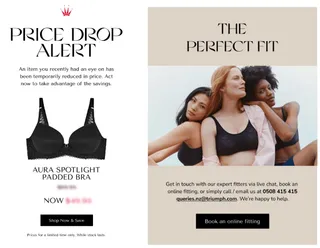
Most email is read on a phone. Simple design, text readable without zooming, big buttons and light images are baseline requirements, not trends.
06Customer content and interactive email
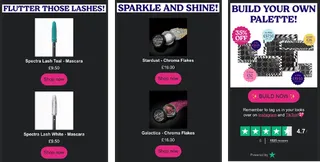
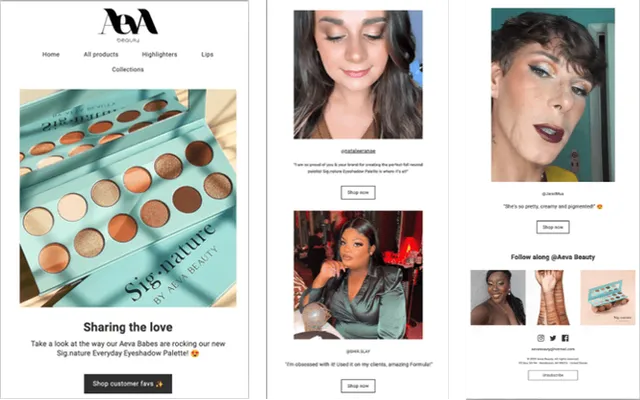
Reviews, photos and testimonials from real customers build trust in email just as they do on a website.
Interactive AMP email (forms, carousels, quizzes inside the inbox) has stayed a niche, though: few email clients display it and it costs more to build. It is only worth it if most of your audience reads in Gmail and you have a clear use, such as a feedback form.
In 2027, a good email is one that reaches the inbox, makes sense from its summary and is judged on what people do after reading it.
If you want to keep up with what changes in digital marketing, subscribe to our newsletter. No spam, just one newsletter a month full of useful things.